
Trauma-Informed Care: Sometimes the Smallest Reactions Tell the Bigger Story
- Dr. Alicia C. Moore

- 23 hours ago
- 5 min read
Understanding how unresolved emotional experiences can quietly shape the way children, teens, and adults respond to everyday life and why certain patterns are often misunderstood
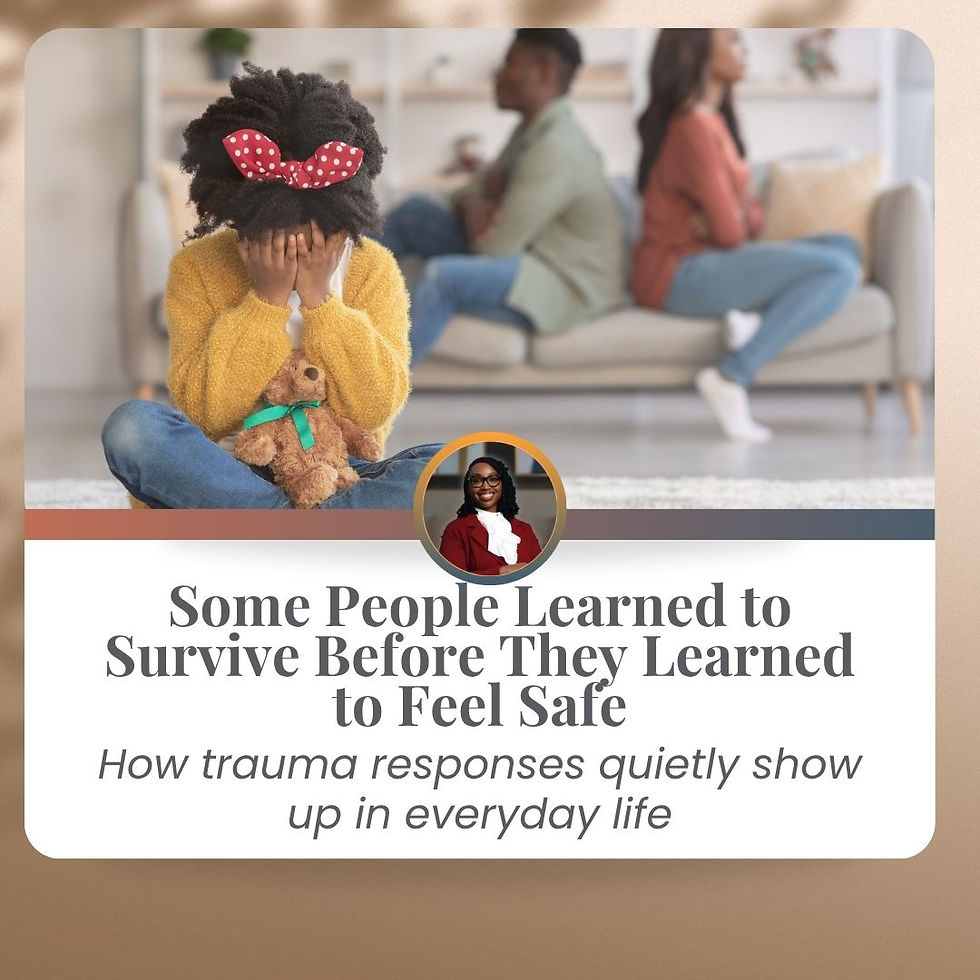
When people hear the word "trauma," they often picture one major event.
Something dramatic. Something obvious. Something people can clearly point to and say, “That is what caused it.”
But in real life, emotional wounds are not always visible that way.
Sometimes trauma looks like a child who panics when someone raises their voice. Sometimes it looks like a teenager who shuts down during conflict instead of talking. Sometimes it looks like an adult who apologizes constantly, avoids difficult conversations, or always seems emotionally on edge without knowing why.
A lot of people carrying unresolved emotional experiences do not walk around talking about trauma openly. Many are simply trying to get through daily life while managing reactions they do not fully understand themselves.
That is one reason trauma-informed care matters.
Not because it labels people. But because it helps others understand that certain emotional reactions, behaviors, or coping patterns may have deeper roots than people initially realize.
At Passionate Path Counseling, we often see how anxiety, emotional shutdown, irritability, people-pleasing, hyper-independence, and difficulty trusting others can sometimes be connected to past emotional experiences people learned to survive rather than process.
Sometimes the Clues Show Up in Everyday Reactions
People who have experienced emotional overwhelm, chronic stress, unstable environments, or painful experiences often adapt in ways that once helped them feel emotionally safer. Over time, those responses can continue showing up even when the original situation is no longer happening.
You might notice someone:
becoming unusually quiet when tension rises
apologizing excessively
seeming constantly alert or easily startled
struggling to trust reassurance
avoiding conflict at all costs
becoming emotionally distant after disagreements
reacting strongly to small changes in tone
needing control over plans or routines
shutting down instead of expressing emotions
seeming uncomfortable relaxing or asking for help
To others, these patterns can sometimes look confusing, dramatic, stubborn, or overly sensitive.
But often, there is more happening underneath the surface than people realize.
In Children, Trauma Responses Often Look Like “Behavior”
Children rarely explain emotional overwhelm directly. Instead, it often shows up through reactions adults may misunderstand at first.
It can look like:
emotional meltdowns that seem bigger than the situation
difficulty calming down after becoming upset
becoming extremely clingy or fearful
avoiding certain people or places
struggling with transitions or unexpected changes
needing constant reassurance
becoming unusually responsible for their age
watching adults closely before reacting
freezing or shutting down during stress
Sometimes adults assume the child is simply “acting out.” But sometimes the child is reacting from a nervous system that has learned to stay alert, careful, or protective because something once felt emotionally unsafe or unpredictable.
In Teens, It Often Hides Behind Withdrawal
Teenagers carrying emotional stress or unresolved experiences often become harder to read emotionally. Some become reactive and irritable. Others become emotionally distant.
You might notice:
isolating more than usual
difficulty opening up emotionally
becoming defensive quickly
losing interest in things they used to enjoy
sleeping excessively or struggling to sleep
constantly distracting themselves online
avoiding conversations about emotions
acting emotionally numb or detached
becoming overwhelmed by criticism, even small criticism
A lot of teens are not trying to be difficult. Sometimes they simply do not feel emotionally safe enough to explain what is happening internally.
In Adults, Trauma Responses Are Often Mistaken for Personality
Adults who have spent years surviving emotionally often become very skilled at appearing functional. Some become highly independent because relying on others never felt safe. Some become people-pleasers because conflict feels emotionally threatening. Some constantly stay busy because slowing down feels uncomfortable.
You might notice someone:
struggling to relax without guilt
becoming emotionally overwhelmed during conflict
needing reassurance often
pulling away emotionally after feeling hurt
overthinking conversations repeatedly
seeming emotionally guarded
fearing being a burden to others
avoiding vulnerability even with people they trust
becoming exhausted from always trying to hold everything together
A lot of these patterns are often judged harshly by others because people only see the reaction, not the emotional history underneath it.
Sometimes the Biggest Shift Is Realizing “This May Be Coming From Somewhere”
One of the most helpful parts of trauma-informed care is that it shifts the question.
Instead of: “What is wrong with them?”
It slowly becomes: “What may have shaped the way they respond to stress, conflict, relationships, or emotions?”
That does not mean excusing harmful behavior. And it does not mean assuming every emotional reaction comes from trauma. It simply creates space for curiosity instead of immediate judgment. Sometimes people are not overreacting.
Sometimes their mind and body learned to stay prepared for emotional pain long before anyone realized how much they were carrying.
What Supportive Responses Can Quietly Look Like
People often feel pressure to “fix” someone they care about. But many times, supportive relationships are built through consistency, emotional safety, and small moments that help someone feel less alone.
Sometimes support looks like:
noticing patterns without immediately criticizing them
staying calm during emotional reactions
listening without forcing someone to open up
avoiding phrases like “you’re overreacting”
giving people space without emotionally abandoning them
being patient with emotional shutdown or hesitation
understanding that trust may take time
responding with steadiness instead of pressure
Trauma-informed care is not about treating people as fragile. It is about understanding that emotional experiences can shape the way people protect themselves, communicate, react, and connect with others.
Awareness Changes the Way People Feel Seen
A lot of people spend years feeling misunderstood before someone finally responds to them with patience instead of frustration.
The child labeled “too sensitive.” The teen labeled “difficult.” The adult labeled “cold,” “dramatic,” or “too much.” Sometimes what people need most is not immediate advice.
Sometimes they need someone willing to recognize: “This reaction may be connected to something deeper.”
At Passionate Path Counseling, we support children, teens, adults, and couples navigating anxiety, trauma, emotional overwhelm, burnout, relationship challenges, and life transitions through virtual therapy across Texas.
Awareness does not begin with having all the answers.
Sometimes it begins with noticing that someone may be carrying more than they know how to explain.
Are you ready to move from success to fulfillment? Passionate Path Counseling is here to help. We provide virtual therapy for adults, professionals, couples, and families navigating anxiety, stress, burnout, and life transitions. Let’s work together to build resilience, align your goals with meaning, and create a life that feels deeply rewarding.


Comments